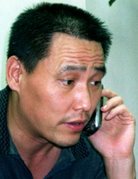
昨天,是八九民运的第十七个纪念日,我经历了有生以来的首次“依法”传唤\x{2014}\x{2014}我被北京市公安局一处的孙狄副处长,先后两次“控制”到丰台区樊家村派出所。中国政府以其侵犯基本人权的“实际行动”,维护了天安门广场上那暴力掩盖之下的“稳定”。
1989年6月3日子夜,坚持不撤的几千名学生和市民,集结到天安门广场纪念碑北侧,周围火光冲天枪声大作,边上的松树墙着了火,喇叭里播放着杀气腾腾的公告,此时已有无数人喋血街头。合围广场的戒严部队到达了指定位置,但他们尚未开始清场,只肯让人看到钢盔上映出来那惨绿的光。就在这个时候,我告诉身边的同学们,纪念碑将会见证我们的死,但是假如能活着出去,此后每年的今天,我都会再回来,来这里凭吊所有无辜的死难者。
这句话竟然成了我许下的一个愿,一个可能需要终生来还的愿。从1990年至今,我所有的6月3日都来这里盘桓,从未间断过。每到这一天,我们夫妻都要约上若干好友,从1995年起还带上了儿子,来到纪念碑的脚下想想心事。每年的6月3日,也是我忏悔的日子,我都要在此地拨通丁子霖老师的电话,以便这位白发苍苍的母亲,能如期收到儿子的问候。我们的心态一年年平和起来,这是因为仇恨的蓄积于事无补,冲突的化解需要宽容,但这一切和解的前提,都只能是放开言论和说出真相,让敏感的事情不再敏感。我相信,一定还会有人像我们一样在坚持。
忘记历史对不住先行者,苟活下去将无颜再见“暴徒”们的在天之灵。即使不能像当年的柴玲那样,“头可断血可流,誓与广场共存亡”,至少我们需要忏悔。但刻意的掩饰尘封了历史,“天安门母亲”日渐凋零,“六四”成了需要回避的话题,连合唱《国际歌》都是犯忌的事情,似乎1989年的今天这里不曾有过血腥。八九一代人需要对这场遗忘承担责任\x{2014}\x{2014}当年的学生已进不惑,如今成了社会的中坚,但社会却在我们手里日渐腐败,我们既没能告诉后人发生了什么,甚至失去了面对自我的勇气。正如崔健在歌中所唱到的,“过去的理想如今变成工具了”。我无法宽恕自己的懦弱。
我必须留住记忆,更希望人们拒绝遗忘,“八九”不能走进历史,否则悲剧便会重演。6月2日晚上九点钟,我写了短信打算发到上千个手机上,内容如下:“六月三日晚上,是八九屠城的第十七个年头,我们将前往天安门广场纪念碑下凭吊。只想告诉自己,这件事并未走入历史,而是植根于内心深处。浦志强与君共勉:勿忘六四,说出真相;立足维权,倡导和解!”我所做的,已经是最低限度的抗争了,为的只是自己能理得心安。 像去年一样,我把短信发给了“关照”我的警察,算是打了招呼\x{2014}\x{2014}以免“上边儿”怪罪下来,他们还得跟着坐蜡。没想到江山竟会“固若金汤儿”若此,几封短信也能搞得“鸡犬”不宁。6月3日凌晨1点10分电话铃响,丰台区国保大队的程广雷已奉命“摸”到楼下,告知北京市公安局要跟我谈谈,希望我千万“配合”一下。我例行公事地抗议一番,上车前往樊家村派出所,走进大厅时看到靠墙摆着“文明养犬”的黑板,不禁哑然失笑\x{2014}\x{2014}也许到了政府也做到“文明养犬”的时候,这个社会才能和谐起来。
市公安局孙狄副处长和韩峰警官已恭候多时了。孙狄的身高与我相仿,一脸憨厚作深藏不露状,看上去找不到多少表情。他说,他们接获了有关短信的报告,所以奉命前来向我了解细节。“天安门广场是什么地方,明天是什么日子,大家心里都清楚。你给这么多人发短信说要去那里,其中还有不少中外媒体,要是大家都去了,那里出了事怎么办?”他说。“上边儿”认为,我的短信危害了稳定,他要问清楚我发短信的动机、内容、发给了多少人,以及这些人到底是谁。
我平静地回答他,我的短信对象中不会有任何人“举报”我,收信人也不会都去广场,“我没那么大的感召力,这一点连胡锦涛都做不到。”我说国内的媒体早吓破了胆,记者想报道也是枉然,而国外媒体无论如何都要报道,你们想管也管不了,因而此举的好坏任人评说也就是了,无需大惊小怪。既然数年如一日地监控至今,我希望最好开诚布公都磊落点儿,边说边随手把短信转发给他。我告诉他匹夫不可夺志,6月3日去广场凭吊“六四”死难者,是我当年许下的愿,去了无非就是还愿,去不成心里便会不踏实。我还说在中国发短信好像并不犯法,6月3日去广场也不犯法,没有任何法律规定了禁止公民凭吊“六四”,所以我们之间的这次谈话纯属多余。我说我很气愤,你们警察半夜三更地闯上家门,不拿任何手续就想找我“谈谈”,这么干了就属于执法犯法。
孙狄希望我再别乱发短信了,最好能再低调一点,“你自己想去就悄悄地去呗,还发什么短信啊?”他承诺不会限制我的自由,但可能派员“护驾”随行,我表示了理解和接受。我让孙狄转告“上边儿”,虽然我认为那部《集会游行示威法》违反了宪法,但假如真想集会游行示威,我会“依法”提前具文申请的,此行既然纯属个人私事,而且天安门广场属于公共空间,警方限制我的行动便是违反宪法。我还希望政府能正视现实和面对历史,拿出诚意来解决“六四”问题,掩耳盗铃难以持久,而且会让人“相当”地瞧不起。
这次谈话于凌晨三点左右结束,我被程广雷送回家中。但事情又有了变化。
上午10点20分,警察把电话打到家里,通知我今天不许出去,这意味着几小时前孙狄的承诺,不再算数了。虽说尚在意料之中,但我十分生气。饭后下楼遛狗,见到丰台区国保大队三位干警已经“上岗”,个个一脸的无奈\x{2014}\x{2014}有的人整个晚上没能睡觉,困得东倒西歪。当场与孙狄通话,指出既然官府“违约”在先,我便只好公之于众了,同时还希望他继续沟通和请示,最好不要欺人太甚,至少该成全我这一年一度的还愿之行。
遛完狗已是中午,警察陪着我回到楼下,跟我相熟的一位应邀造访。我忙着写我和孙狄之间发生的“不得不说的故事”,母亲在包饺子招呼客人,客人帮着擀皮儿\x{2014}\x{2014}家里平常门庭冷落,老太太见了警察都非常高兴。
下午一点多钟,程广雷又到楼下,希望我下楼“再聊会儿”。我用群发邮件发出了刚写的片段,匆匆吃下几个饺子,身着T恤、拖鞋、短裤便“微服”赴约。他睡眼惺忪地告诉我,还得到派出所去一趟,“市局”的还想再谈谈,我说那就让他们来楼下谈吧\x{2014}\x{2014}这里既凉快又敞亮。他说这我哪儿能做得了主啊,你就少说两句再“配合”一下吧。我心里明白,为确保纪念碑脚下不会出现我的身影,他们多半要陪我“共度”几个小时了\x{2014}\x{2014}“上边儿”交代的公事,就是要“搅黄”我的私事,但他们做不到有话直说。
下午出场的,是市局一处的姜庆杰和张凯军,孙狄直到晚饭前才露面儿。姜庆杰1996年毕业于中国人民公安大学,透着精明强干,只是又忘了出示合法手续。他们关心的还是短信内容、动机和发送对象,但目的显然是要“绊”住我。他说这时候发这样的短信,会危害稳定和造成后果,所以必须要把事实查清楚。我先谴责孙狄不守信用,然后请教他我发短信、去广场、凭吊“六四”是否犯了法,问他发短信能否损害到社会稳定。我说我可以理解你们办差的苦衷,但不会容忍如此疾言厉色,说到底是政府的骚扰违法了,而不是我的行为违法\x{2014}\x{2014}我无权要求别人凭吊“六四”,我没有这么做,但政府更无权限制我凭吊“六四”,可你们却正在这么做!假如想公事公办,我便没有“配合”义务,谈话马上可以结束。
可这场谈话还得接着进行下午,于是便只剩下了云山雾罩,间或做点儿法律咨询。案子太多了经常加班,待遇太低了升不了官,在看守所里能不能不吃窝头只吃烙饼疙瘩汤,都是我们的“闲篇儿”。我开玩笑说,听说当年“跟着”魏京生和刘晓波的张志超等人早就升了官儿,所以卖点儿力气好好“跟着”我,说不定哪天也能混个一官半职\x{2014}\x{2014}去年赵紫阳仙逝那几天,有幸陪我住了一宿的那位小伙子,一转眼儿就当了这家派出所的副所长,手下能管几十号人。
吃完盒儿饭烙饼,已经是晚上六七点钟,他们要做份笔录“走个程序”。我说开始时怎么不说这回是传唤呢,我还一直以为也是“绑票儿”呢。我问张凯军为什么要传唤我,如果是传唤,那我就得请个律师了。他说依据的是《中华人民共和国治安管理处罚法》第82条,我让他给我念念这“大法”里边说的是啥,因为我还没被传唤过\x{2014}\x{2014}每回都是警察缠着我非法“聊天”的。看了几眼法律,我说你们错了,因为只有在发现有违反治安管理处罚法的行为时,才可以“依法”传唤,而我并没有这种行为。他们回答说这条儿只是程序性的规定,你要是不同意可以在里边儿说清楚。于是,我“配合”他们回答了问题,指出了他们的违法之处,看过笔录后签字画押,又特别注明了警察的违法行为没有被记录下来。
与此同时,朋友们不断打电话问我到哪里了,告诉我今年很是奇怪,八点钟就往外轰人要“清场”了,而往年今天都是九点多钟才清场的。我告诉他们我在派出所,已被依法“绑票儿”了七八个小时,让他们注意安全别惹事。
晚上九点半,孙狄让我签字“确认”传唤结束的时间是晚上十点钟,他说“传唤”是从下午两点半开始的,只要在八小时内结束都是合法的。我祝贺他圆满完成了任务,因为他们的任务就是干扰我的私事,但国家因此丢尽了脸,而且在派出所被控一天,我实际上也还了愿。我提醒他,早上两个小时“传唤”还没有“走程序”,千万别给我留下把柄,他笑着说那次只是私人聊天儿,不是“传唤”。
6月4日中午,我来办公室加班工作,两个警察奉命陪伴左右维护“稳定”大局,我们就这样一直耗到了此时此刻。
浦志强
2006年6月4日晚十点于北京
© 2007 Radio Free
The New York Review of Books, August 10, 2006 纽约书评 2006年8月10日
Feature
'June Fourth' Seventeen Years Later: How I Kept a Promise
By Pu Zhiqiang
The weekend of June 3, 2006, was the seventeenth anniversary of the Beijing massacre and also the first time I ever received a summons. It happened, as the police put it, "according to law." Twice within twenty-four hours Deputy Chief Sun Di of Department 1 of the Beijing Public Security Bureau ordered me—"controlled" me, in police lingo—to go to the Fanjiacun police station in the Fengtai District of Beijing. This "practical action" of the Chinese government, although it violated basic human rights, was taken in support of the "stability" that the violent suppression at Tiananmen had brought about.
I recall the early hours of June 4, 1989. The few thousand students and other citizens who refused to disperse remained huddled at the north face of the Martyrs' Monument in Tiananmen Square. The glare of fires leaped skyward and gunfire crackled. The pine hedges that lined the square had been set ablaze while loudspeakers screeched their mordant warnings. The bloodbath on outlying roads had already exceeded anyone's counting. Martial law troops had taken up their staging positions around the square, awaiting final orders, largely invisible except for the steely green glint that their helmets reflected from the light of the fires. It was then that I turned to a friend and commented that the Martyrs' Monument might soon be witness to our deaths, but that if not, I would come back to this place every year on this date to remember the victims.
That comment somehow turned into a vow—one that I may need to be fulfilling indefinitely. So far, I have. Every year on the evening of June 3, I have come back to Tiananmen to linger for a while. My wife and I join a few good friends—and beginning in 1995, have brought our son—to gather at the base of the Martyrs' Monument and spend some time in reflection.
For me these visits have also aroused guilt feelings. The government's pressures to forget June Fourth have caused the day slowly to erode in public memory: each year the Tiananmen Mothers seem more isolated, and the massacre seems more a topic to be avoided in daily conversation; even singing "The Internationale," as students did that night, has become vaguely embarrassing. A certain lazy comfort attends this forgetting, and that is why I feel guilt. If I just slouch along through life, taking the easy route, what do I say to the spirits of those murdered "rioters" of seventeen years ago? And if everyone forgets, are we not opening the door to future massacres? Our Tiananmen generation is now in middle age; we are in positions where we can make a difference. Do we not want to? At a minimum, my guilt feelings cause me to telephone Professor Ding Zilin, a leader of the Tiananmen Mothers, every year on June 3 from Tiananmen Square. It allows me to feel that I am bringing greetings to this white-haired mother from the spirit of her dead son.
I know that I am not alone in these feelings, and that is why I involve others in my annual visits. My purpose is not to stimulate resentment. Reconciliation is fine, but it must be based on truth.
This year, about 9 PM on June 2, I sent the following cell-phone text message to a number of friends:
On the evening of June 3 we will gather at the base of the Martyrs' Monument in Tiananmen Square to reflect upon the 1989 massacre. The purpose is to remind ourselves that those events have not been consigned to history but remain deeply rooted in our minds. Pu Zhiqiang asks your support in declaring: do not forget the massacre; uphold truth; promote reconciliation based on legal rights.
In fact it was a minimal gesture, aimed mostly at assuaging my own unease.
I also forwarded the message to the low-ranking police who are assigned to "care for" me. I did the same last year. It is better for all concerned to do this. It prevents causing a shock to the police higher-ups, who, if angered, take it out on their underlings as well as on me. I did not anticipate that this time my message would set off a ruckus.
At 1:10 AM on June 3 my phone rang. It was Officer Cheng Guanglei of the National Security Unit in Fengtai District. He had been ordered to "find his way" to the doorway of my building, from where he was calling to inform me that the Public Security Bureau of Beijing City wanted to have a chat with me. He earnestly hoped that I would "coordinate" with this plan. I offered a perfunctory protest, but then went downstairs, got into the officer's car, and went to the Fanjiacun police station. As we entered the main hall I noticed a blackboard bearing the words "Be Civilized in Raising Dogs." I had to stifle a laugh. If our government were to reach the level of "civilization in raising dogs," then, yes, we would be well on our way to the "harmonious society" that our leaders were touting.
Deputy Chief Sun Di and Officer Han Feng were waiting for me. Sun Di is about six feet tall. He struck me as good-natured, but deadpan: there was no way to guess what he was thinking. He said the police had received a report about my text message, so they needed to talk to me in order to understand the details.
"We all know what place Tiananmen Square is, and what day tomorrow is," he said. "You sent a text message to a lot of people, including quite a few foreign and domestic media, saying that you intend to go there. If everybody goes, and something happens, then what?" In the view of his superiors my text message "endangers stability," he said, so he needed to get clear on a few things: my motive, the message contents, the number of recipients, and the identity of each recipient. He invited me to explain.
I began by saying that I was confident that no one on my list of recipients would inform on me. I didn't imagine that all the recipients would head for Tiananmen Square, either. "I don't have that kind of charisma," I said, "not even Hu Jintao does." Would reporters go? Chinese journalists had long been frightened into silence on this topic, and even if one went, no report could be published. The foreign media? They always report the Tiananmen anniversary anyway—there's nothing you can do about that. People are going to have their own opinions of what I'm doing in any event, so there's no point getting all hot and bothered by it.
Then I explained why I had forwarded the text message to the police. Since I had been under their surveillance for some time now, I thought I might as well be aboveboard about everything and avoid any misunderstandings. But you can't deprive a person of his will, I said, and going to Tiananmen every June 3 to commemorate the dead is a promise that I made to myself. I go there to keep the promise, and would feel wrong if I did not.
I ended by saying that I understood it to be legal to send text messages in China and legal to go to Tiananmen Square on June 3. Moreover, no law prohibits citizens from commemorating the victims of 1989. Since this is so, our whole chat right now is superfluous. For you to come to my building in the middle of the night, without any legal papers and asking for a "chat," is itself an example of illegal use of police power.
Deputy Chief Sun responded that he wished I would lower my profile a bit and stop sending text messages all over the place. "If you want to go, then just quietly go," he advised. "What's the need for text messages?" He promised not to restrict my movements, but said he might assign some people to accompany me "for protection."
"Fine," I said. "I understand." Then I asked Sun to relay to his superiors my own promise that, although I view China's "Law on Assembly, Marches, and Demonstrations" to be in violation of China's constitution, I would make written application in advance if I ever were to plan "an assembly, march, or demonstration." But since my present plan is a purely personal matter, and since Tiananmen Square is a public space, police obstruction of my movement would be unconstitutional. Please also tell your superiors, I said, that I hope the government will finally face history squarely and solve the "June Fourth" problem. A world of make-believe on this issue cannot last forever, and it generates quite a lot of contempt.
Our chat ended about 3:00 AM. Officer Cheng Guanglei saw me home. But that was not the end of it.
At 10:20 AM the police called my home to tell me that I could not go out. This meant, without their saying it, that Sun Di's promise of a few hours earlier was no longer valid. Although I had half-expected this news, it angered me. I went downstairs to walk the dog. Three patrolmen from the National Security Unit of Fengtai District were already on duty at my door. They looked bedraggled from lack of sleep. I telephoned Sun Di from the spot. Since he had broken his promise, I had no choice but to send out a text message explaining that fact, I said. I hoped that he would stay in touch, though, both with me and with his superiors, and do what he could not to break his word too grievously. At least, I said, he should help me to keep my promise of a yearly visit to Tiananmen this evening. Then I walked the dog.
The police joined me on the walk, and afterward I invited one of them, with whom I was fairly well acquainted, to come upstairs for lunch. My elderly mother was home, and we didn't often have guests, so she was delighted to have one. She made special dumplings, and the young policeman helped by rolling the dumpling skins. I was busy composing my text message about "the story that I had no choice but to tell."
Shortly after 1:00 PM Officer Cheng Guanglei reappeared downstairs. He called on his cell phone to invite me down for "another chat." I gobbled down a few dumplings, pressed "send" on my text message, and went down to see him dressed in a T-shirt, shorts, and slippers. He, too, looked short of sleep. He told me I would need to come down to the police station again, because some municipal-level officers wanted to see me.
"Why don't they come here?" I asked. "See how cool and bright it is here?"
"You know such things aren't up to me," Cheng said. "Could you cut the questions and just 'coordinate' with us again?"
I could see what was going on. In order to guarantee that I would not be seen that night at the base of the Martyrs' Monument, the police were going to "spend time" with me for a while. They had instructions from above to "frustrate" my personal plans, but they couldn't plainly say so.
The people waiting for me were Jiang Qingjie and Zhang Kaijun of Department 1 of the Public Security City Bureau. Sun Di joined us later. Jiang Qingjie, a 1996 graduate of the Chinese People's Public Security University, was the picture of competence and efficiency—but, like his colleagues, skipped the step of showing any legal papers. Their formal agenda remained the same: they wanted to inquire about my text message, my motive for sending it, and a recipient list. But their real objective, clearly, was to "tie up" my time.
Jiang Qingjie began by saying that to send a text message like this, at a time like this, harms stability and produces consequences. This is why he has to get clear about everything.
I responded that Sun Di had broken his word. Then I inquired whether sending text messages, going to Tiananmen Square, or commemorating June Fourth was illegal. Who, I asked, was actually breaking the law? Just as I have no right to force other people to commemorate June Fourth, so the government has no right to bar me from doing so. But that, I said, is exactly what you are doing right now. If we go by the rules, I don't have to "coordinate" with you and we can end our chat right here.
But the chat did drag on, all afternoon, as the room grew heavy with cigarette smoke. Every now and then we discussed some legal matter, but for the most part the topics lay elsewhere. I asked if the inmates at their detention center could eat wheat pancakes and dough-drop soup these days, or if they still had to survive on corn balls. The policemen offered many topics of their own: how their pay was low, promotions were impossible, and how they always had to work overtime because there were too many cases. I joked with them that if they did a good job "accompanying" me they might get raises. Last year the young man who was assigned to be with me around the clock during the "sensitive time" after Zhao Ziyang's[*] death got a promotion shortly thereafter to deputy station chief in charge of several dozen people.
About 6 or 7 PM, after box dinners all around, they wanted to "do a formality" about my summons.
"Summons? You mean this was a summons?" I asked. "To me it felt rather more like a kidnapping." I told Zhang Kaijun that if I'd known it to be a formal summons, I would have wanted a lawyer.
Zhang answered that he was basing himself on article 82 of the Penal Code of the People's Republic of China on the Management of Public Order.
I said that I was used to illegal detention for "chats," but had never received a summons before. So could he please read to me what that article says? He didn't read it, but showed it to me.
"You're mistaken," I said after glancing through it. "It says here that a summons may be issued 'according to law' only after discovery that a person's behavior has violated the penal code on public order. My behavior has not."
The police responded that article 82 was only a procedural regulation. "If you don't agree with what we're doing, you can go into detail in your statement."
So I "coordinated" again. I answered their questions—pointing out, in passing, where they had broken the law. They took notes. In the end I affixed my signature and thumbprint to their written record, noting explicitly that they had omitted mention of the illegal behavior of the police.
By then I was starting to get cell-phone calls from friends at Tiananmen who wondered where I was. Something else strange was going on, they said. In earlier years the police cleared the square sometime after 9 PM, but this year they were already shooing people out by 8 PM. I explained to my friends that I was at a police station, kidnapped "according to law" for seven or eight hours, and that they should take care not to get into trouble.
At 9:30 PM Sun Di asked me to sign my name "confirming" that my summons had ended at 10 PM. It had begun at 2:30 PM, he said, and as long as it ended within eight hours it was legal. I congratulated him on the successful completion of his mission, which was, as both he and I knew, to thwart my plans to go to Tiananmen. On my side, though, the half-day detention at a police station made me feel as if I had, in fact, kept my promise to remember the massacre victims.
I reminded Sun Di that, counting the two hours of summons in the middle of the night, the total for the day was more than eight. Was this not a dangling vulnerability in his work?
"The morning wasn't a summons," he said. "It was just a private chat."
At noon on Sunday, June 4, I went into the offices of my law firm to do some overtime work. Two policemen, assigned to "maintain overall stability," came with me.
—Translated by Perry Link
Notes:
[*] General Secretary of the Communist Party of China 1987–1989, disgraced and held under house arrest from June 1989 until he died on January 17, 2005.
Feature
'June Fourth' Seventeen Years Later: How I Kept a Promise
By Pu Zhiqiang
The weekend of June 3, 2006, was the seventeenth anniversary of the Beijing massacre and also the first time I ever received a summons. It happened, as the police put it, "according to law." Twice within twenty-four hours Deputy Chief Sun Di of Department 1 of the Beijing Public Security Bureau ordered me—"controlled" me, in police lingo—to go to the Fanjiacun police station in the Fengtai District of Beijing. This "practical action" of the Chinese government, although it violated basic human rights, was taken in support of the "stability" that the violent suppression at Tiananmen had brought about.
I recall the early hours of June 4, 1989. The few thousand students and other citizens who refused to disperse remained huddled at the north face of the Martyrs' Monument in Tiananmen Square. The glare of fires leaped skyward and gunfire crackled. The pine hedges that lined the square had been set ablaze while loudspeakers screeched their mordant warnings. The bloodbath on outlying roads had already exceeded anyone's counting. Martial law troops had taken up their staging positions around the square, awaiting final orders, largely invisible except for the steely green glint that their helmets reflected from the light of the fires. It was then that I turned to a friend and commented that the Martyrs' Monument might soon be witness to our deaths, but that if not, I would come back to this place every year on this date to remember the victims.
That comment somehow turned into a vow—one that I may need to be fulfilling indefinitely. So far, I have. Every year on the evening of June 3, I have come back to Tiananmen to linger for a while. My wife and I join a few good friends—and beginning in 1995, have brought our son—to gather at the base of the Martyrs' Monument and spend some time in reflection.
For me these visits have also aroused guilt feelings. The government's pressures to forget June Fourth have caused the day slowly to erode in public memory: each year the Tiananmen Mothers seem more isolated, and the massacre seems more a topic to be avoided in daily conversation; even singing "The Internationale," as students did that night, has become vaguely embarrassing. A certain lazy comfort attends this forgetting, and that is why I feel guilt. If I just slouch along through life, taking the easy route, what do I say to the spirits of those murdered "rioters" of seventeen years ago? And if everyone forgets, are we not opening the door to future massacres? Our Tiananmen generation is now in middle age; we are in positions where we can make a difference. Do we not want to? At a minimum, my guilt feelings cause me to telephone Professor Ding Zilin, a leader of the Tiananmen Mothers, every year on June 3 from Tiananmen Square. It allows me to feel that I am bringing greetings to this white-haired mother from the spirit of her dead son.
I know that I am not alone in these feelings, and that is why I involve others in my annual visits. My purpose is not to stimulate resentment. Reconciliation is fine, but it must be based on truth.
This year, about 9 PM on June 2, I sent the following cell-phone text message to a number of friends:
On the evening of June 3 we will gather at the base of the Martyrs' Monument in Tiananmen Square to reflect upon the 1989 massacre. The purpose is to remind ourselves that those events have not been consigned to history but remain deeply rooted in our minds. Pu Zhiqiang asks your support in declaring: do not forget the massacre; uphold truth; promote reconciliation based on legal rights.
In fact it was a minimal gesture, aimed mostly at assuaging my own unease.
I also forwarded the message to the low-ranking police who are assigned to "care for" me. I did the same last year. It is better for all concerned to do this. It prevents causing a shock to the police higher-ups, who, if angered, take it out on their underlings as well as on me. I did not anticipate that this time my message would set off a ruckus.
At 1:10 AM on June 3 my phone rang. It was Officer Cheng Guanglei of the National Security Unit in Fengtai District. He had been ordered to "find his way" to the doorway of my building, from where he was calling to inform me that the Public Security Bureau of Beijing City wanted to have a chat with me. He earnestly hoped that I would "coordinate" with this plan. I offered a perfunctory protest, but then went downstairs, got into the officer's car, and went to the Fanjiacun police station. As we entered the main hall I noticed a blackboard bearing the words "Be Civilized in Raising Dogs." I had to stifle a laugh. If our government were to reach the level of "civilization in raising dogs," then, yes, we would be well on our way to the "harmonious society" that our leaders were touting.
Deputy Chief Sun Di and Officer Han Feng were waiting for me. Sun Di is about six feet tall. He struck me as good-natured, but deadpan: there was no way to guess what he was thinking. He said the police had received a report about my text message, so they needed to talk to me in order to understand the details.
"We all know what place Tiananmen Square is, and what day tomorrow is," he said. "You sent a text message to a lot of people, including quite a few foreign and domestic media, saying that you intend to go there. If everybody goes, and something happens, then what?" In the view of his superiors my text message "endangers stability," he said, so he needed to get clear on a few things: my motive, the message contents, the number of recipients, and the identity of each recipient. He invited me to explain.
I began by saying that I was confident that no one on my list of recipients would inform on me. I didn't imagine that all the recipients would head for Tiananmen Square, either. "I don't have that kind of charisma," I said, "not even Hu Jintao does." Would reporters go? Chinese journalists had long been frightened into silence on this topic, and even if one went, no report could be published. The foreign media? They always report the Tiananmen anniversary anyway—there's nothing you can do about that. People are going to have their own opinions of what I'm doing in any event, so there's no point getting all hot and bothered by it.
Then I explained why I had forwarded the text message to the police. Since I had been under their surveillance for some time now, I thought I might as well be aboveboard about everything and avoid any misunderstandings. But you can't deprive a person of his will, I said, and going to Tiananmen every June 3 to commemorate the dead is a promise that I made to myself. I go there to keep the promise, and would feel wrong if I did not.
I ended by saying that I understood it to be legal to send text messages in China and legal to go to Tiananmen Square on June 3. Moreover, no law prohibits citizens from commemorating the victims of 1989. Since this is so, our whole chat right now is superfluous. For you to come to my building in the middle of the night, without any legal papers and asking for a "chat," is itself an example of illegal use of police power.
Deputy Chief Sun responded that he wished I would lower my profile a bit and stop sending text messages all over the place. "If you want to go, then just quietly go," he advised. "What's the need for text messages?" He promised not to restrict my movements, but said he might assign some people to accompany me "for protection."
"Fine," I said. "I understand." Then I asked Sun to relay to his superiors my own promise that, although I view China's "Law on Assembly, Marches, and Demonstrations" to be in violation of China's constitution, I would make written application in advance if I ever were to plan "an assembly, march, or demonstration." But since my present plan is a purely personal matter, and since Tiananmen Square is a public space, police obstruction of my movement would be unconstitutional. Please also tell your superiors, I said, that I hope the government will finally face history squarely and solve the "June Fourth" problem. A world of make-believe on this issue cannot last forever, and it generates quite a lot of contempt.
Our chat ended about 3:00 AM. Officer Cheng Guanglei saw me home. But that was not the end of it.
At 10:20 AM the police called my home to tell me that I could not go out. This meant, without their saying it, that Sun Di's promise of a few hours earlier was no longer valid. Although I had half-expected this news, it angered me. I went downstairs to walk the dog. Three patrolmen from the National Security Unit of Fengtai District were already on duty at my door. They looked bedraggled from lack of sleep. I telephoned Sun Di from the spot. Since he had broken his promise, I had no choice but to send out a text message explaining that fact, I said. I hoped that he would stay in touch, though, both with me and with his superiors, and do what he could not to break his word too grievously. At least, I said, he should help me to keep my promise of a yearly visit to Tiananmen this evening. Then I walked the dog.
The police joined me on the walk, and afterward I invited one of them, with whom I was fairly well acquainted, to come upstairs for lunch. My elderly mother was home, and we didn't often have guests, so she was delighted to have one. She made special dumplings, and the young policeman helped by rolling the dumpling skins. I was busy composing my text message about "the story that I had no choice but to tell."
Shortly after 1:00 PM Officer Cheng Guanglei reappeared downstairs. He called on his cell phone to invite me down for "another chat." I gobbled down a few dumplings, pressed "send" on my text message, and went down to see him dressed in a T-shirt, shorts, and slippers. He, too, looked short of sleep. He told me I would need to come down to the police station again, because some municipal-level officers wanted to see me.
"Why don't they come here?" I asked. "See how cool and bright it is here?"
"You know such things aren't up to me," Cheng said. "Could you cut the questions and just 'coordinate' with us again?"
I could see what was going on. In order to guarantee that I would not be seen that night at the base of the Martyrs' Monument, the police were going to "spend time" with me for a while. They had instructions from above to "frustrate" my personal plans, but they couldn't plainly say so.
The people waiting for me were Jiang Qingjie and Zhang Kaijun of Department 1 of the Public Security City Bureau. Sun Di joined us later. Jiang Qingjie, a 1996 graduate of the Chinese People's Public Security University, was the picture of competence and efficiency—but, like his colleagues, skipped the step of showing any legal papers. Their formal agenda remained the same: they wanted to inquire about my text message, my motive for sending it, and a recipient list. But their real objective, clearly, was to "tie up" my time.
Jiang Qingjie began by saying that to send a text message like this, at a time like this, harms stability and produces consequences. This is why he has to get clear about everything.
I responded that Sun Di had broken his word. Then I inquired whether sending text messages, going to Tiananmen Square, or commemorating June Fourth was illegal. Who, I asked, was actually breaking the law? Just as I have no right to force other people to commemorate June Fourth, so the government has no right to bar me from doing so. But that, I said, is exactly what you are doing right now. If we go by the rules, I don't have to "coordinate" with you and we can end our chat right here.
But the chat did drag on, all afternoon, as the room grew heavy with cigarette smoke. Every now and then we discussed some legal matter, but for the most part the topics lay elsewhere. I asked if the inmates at their detention center could eat wheat pancakes and dough-drop soup these days, or if they still had to survive on corn balls. The policemen offered many topics of their own: how their pay was low, promotions were impossible, and how they always had to work overtime because there were too many cases. I joked with them that if they did a good job "accompanying" me they might get raises. Last year the young man who was assigned to be with me around the clock during the "sensitive time" after Zhao Ziyang's[*] death got a promotion shortly thereafter to deputy station chief in charge of several dozen people.
About 6 or 7 PM, after box dinners all around, they wanted to "do a formality" about my summons.
"Summons? You mean this was a summons?" I asked. "To me it felt rather more like a kidnapping." I told Zhang Kaijun that if I'd known it to be a formal summons, I would have wanted a lawyer.
Zhang answered that he was basing himself on article 82 of the Penal Code of the People's Republic of China on the Management of Public Order.
I said that I was used to illegal detention for "chats," but had never received a summons before. So could he please read to me what that article says? He didn't read it, but showed it to me.
"You're mistaken," I said after glancing through it. "It says here that a summons may be issued 'according to law' only after discovery that a person's behavior has violated the penal code on public order. My behavior has not."
The police responded that article 82 was only a procedural regulation. "If you don't agree with what we're doing, you can go into detail in your statement."
So I "coordinated" again. I answered their questions—pointing out, in passing, where they had broken the law. They took notes. In the end I affixed my signature and thumbprint to their written record, noting explicitly that they had omitted mention of the illegal behavior of the police.
By then I was starting to get cell-phone calls from friends at Tiananmen who wondered where I was. Something else strange was going on, they said. In earlier years the police cleared the square sometime after 9 PM, but this year they were already shooing people out by 8 PM. I explained to my friends that I was at a police station, kidnapped "according to law" for seven or eight hours, and that they should take care not to get into trouble.
At 9:30 PM Sun Di asked me to sign my name "confirming" that my summons had ended at 10 PM. It had begun at 2:30 PM, he said, and as long as it ended within eight hours it was legal. I congratulated him on the successful completion of his mission, which was, as both he and I knew, to thwart my plans to go to Tiananmen. On my side, though, the half-day detention at a police station made me feel as if I had, in fact, kept my promise to remember the massacre victims.
I reminded Sun Di that, counting the two hours of summons in the middle of the night, the total for the day was more than eight. Was this not a dangling vulnerability in his work?
"The morning wasn't a summons," he said. "It was just a private chat."
At noon on Sunday, June 4, I went into the offices of my law firm to do some overtime work. Two policemen, assigned to "maintain overall stability," came with me.
—Translated by Perry Link
Notes:
[*] General Secretary of the Communist Party of China 1987–1989, disgraced and held under house arrest from June 1989 until he died on January 17, 2005.